Specimen preparation
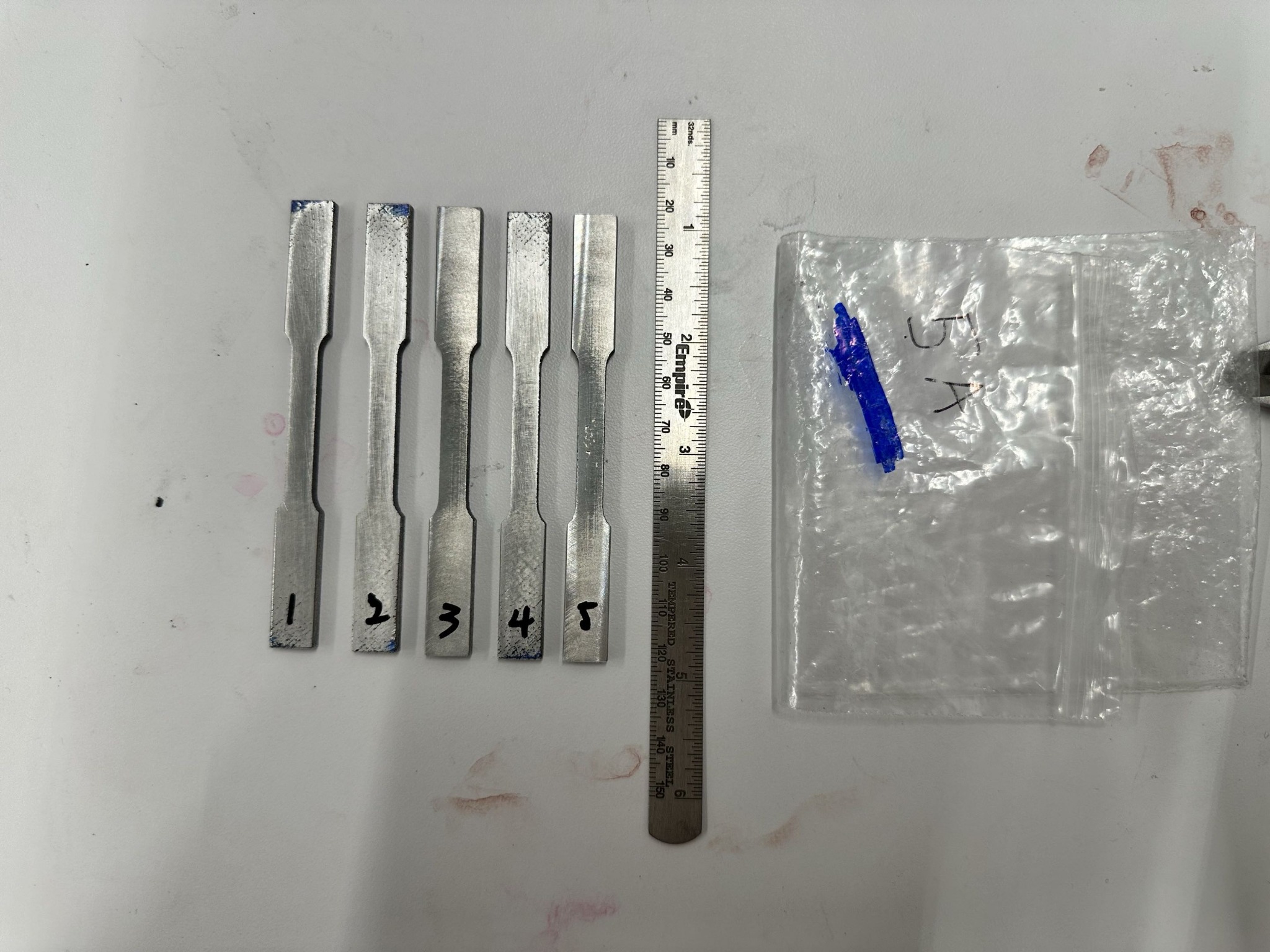
The research team worked with three variants of 3D printed aluminum samples, labeled A, B, and C. Warping in the printed specimens meant their opposing faces needed to be made flat before testing and preparation. I communicated with machinists about corrective processing across the sample batches and helped organize the resulting specimens for the team.
Tensile testing
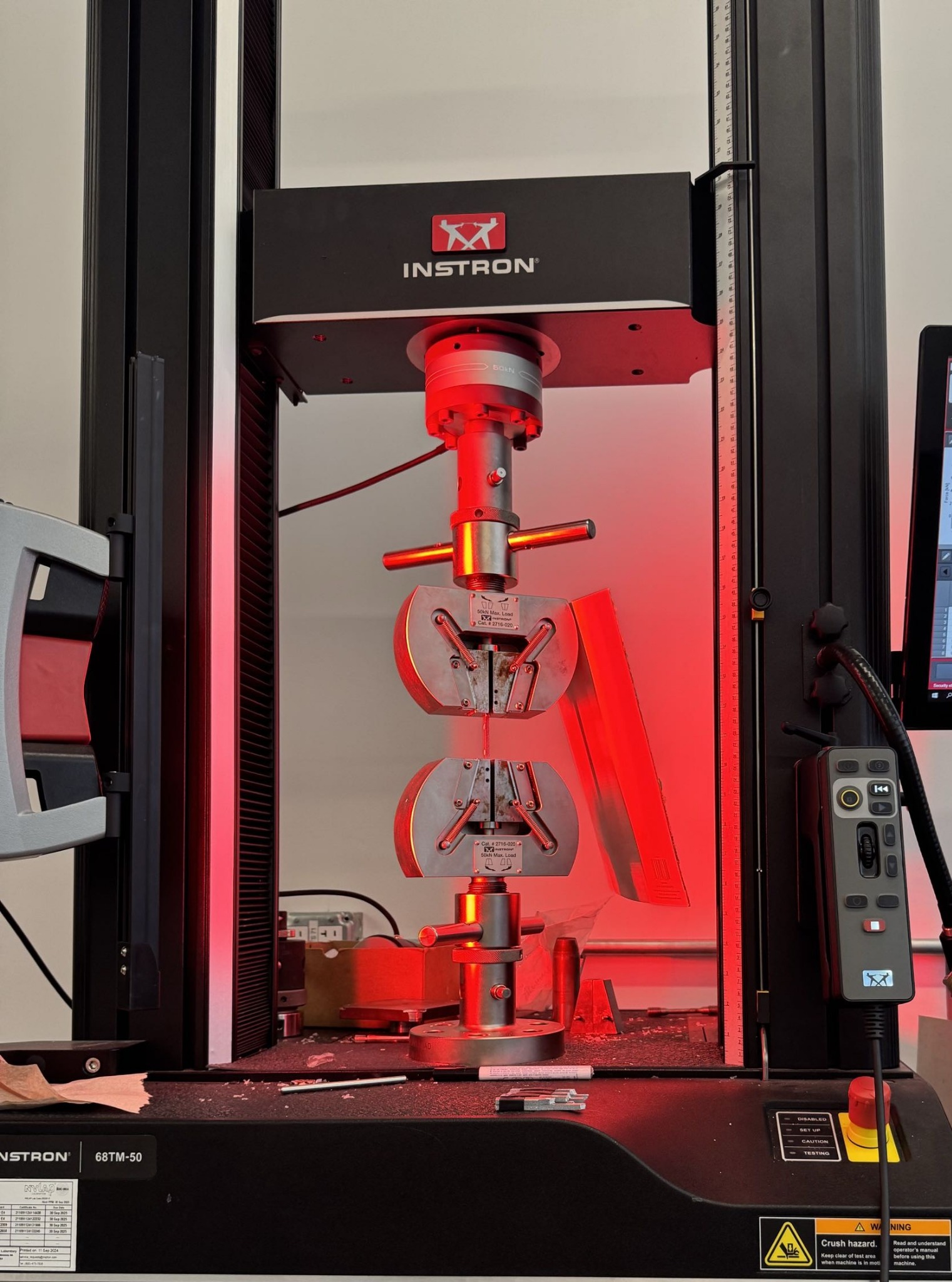
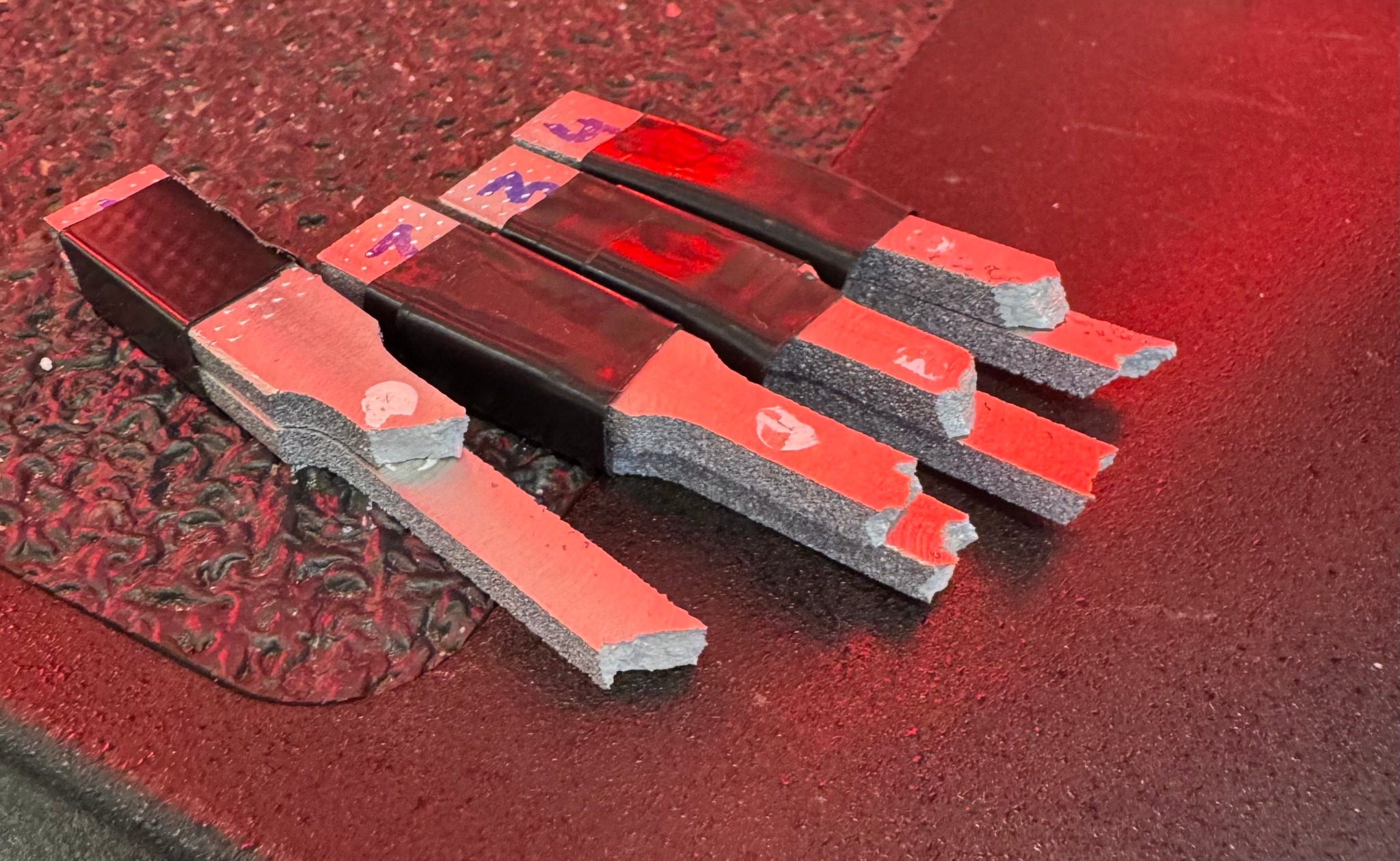
The broader study involved 300 samples across the A, B, and C variants. I helped coordinate corrective machining, specimen organization, and data collection so the team could process the batches consistently. My main testing responsibility was the A and B variants: five specimens from each set were assigned to tensile tests, while others were reserved for metallography, other experiments, or spares. I carried out the assigned A/B tests and coordinated with fellow undergraduates to divide tasks efficiently. We completed this tensile testing by the end of Spring 2026.
The broader research and analysis are continuing, so this account documents the experimental workflow rather than unpublished findings.
Supporting characterization
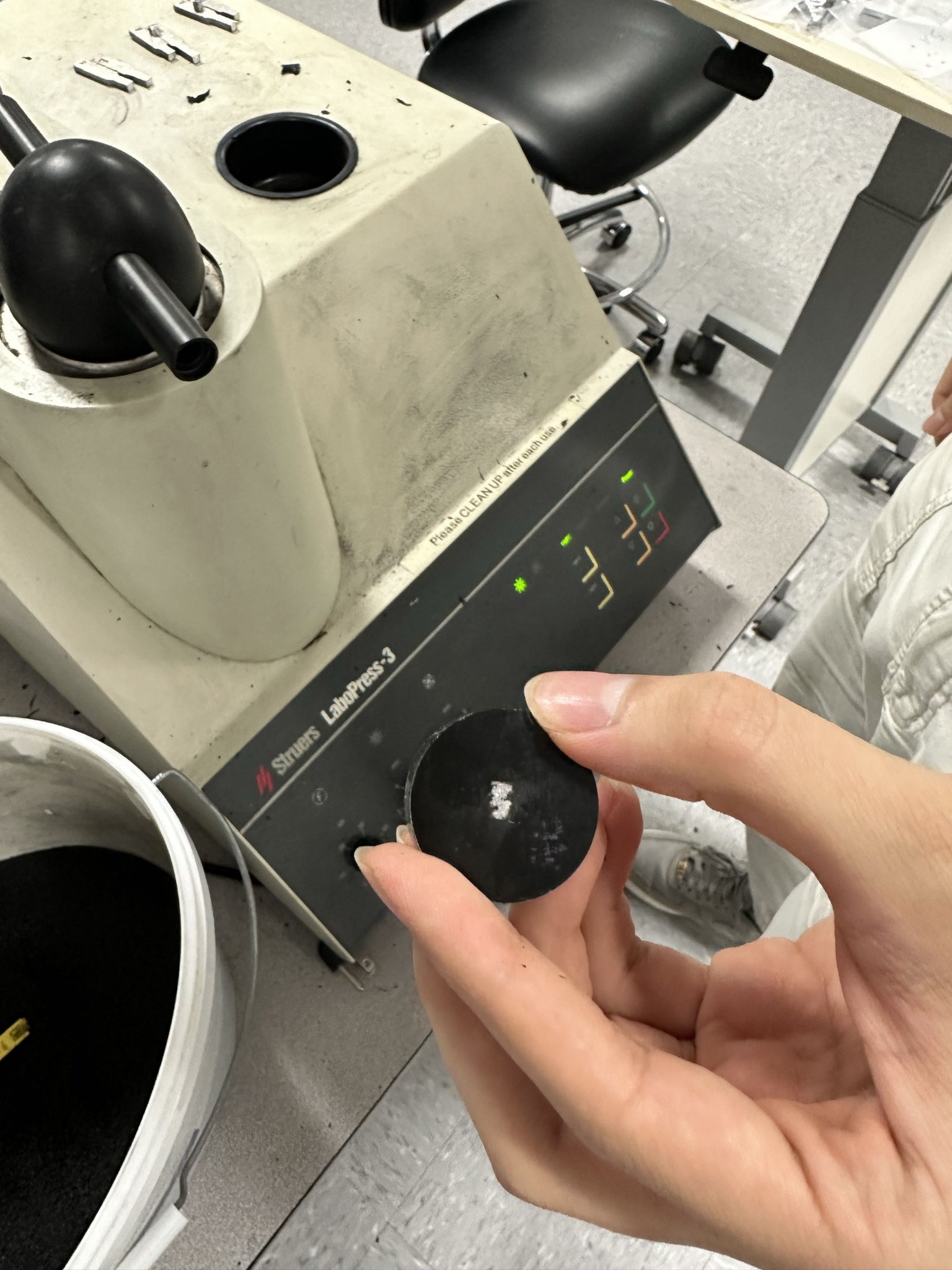
I also assisted with metallographic preparation for samples viewed along different orientations. Specimens were mounted, sanded progressively, and polished with a diamond suspension. We inspected the surfaces under an optical microscope as preparation progressed; other samples were reserved for etching, hardness testing, and further microscopy.
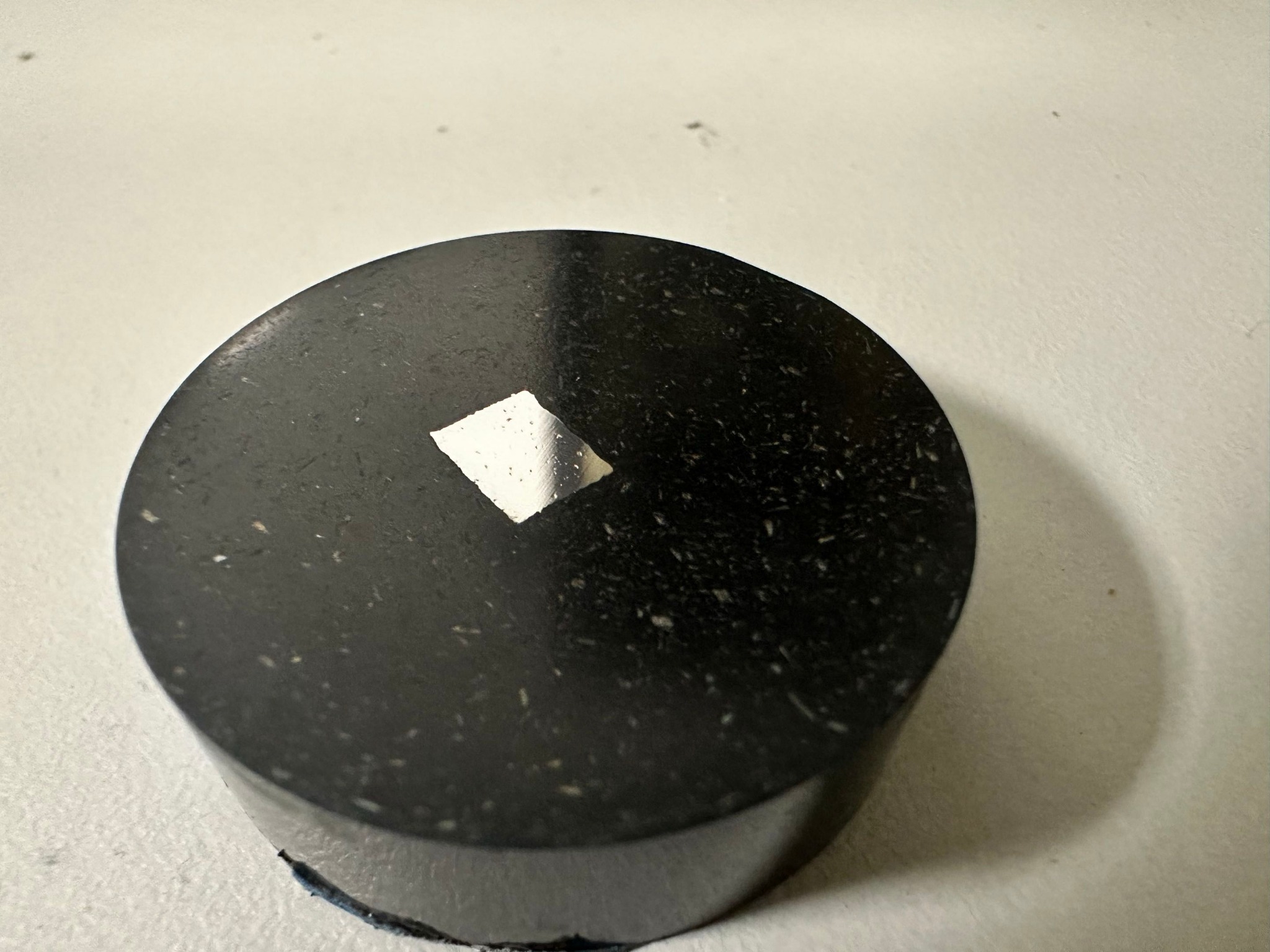
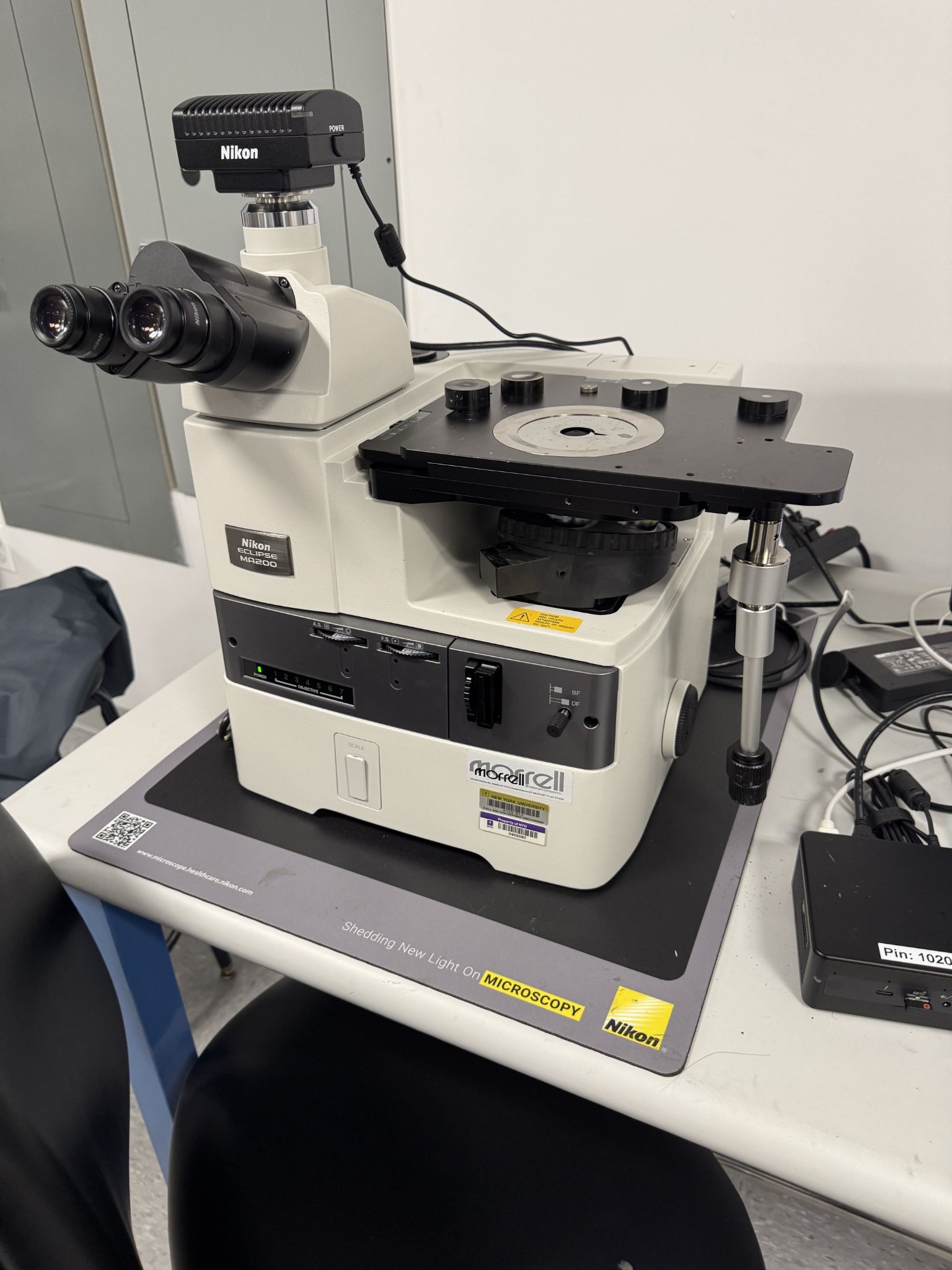
Research assistance in NYU Tandon's Composite Materials and Mechanics Laboratory. The study is ongoing; unpublished mechanical-property results and plots are intentionally omitted.